



What Is PDF/A? Understanding the PDF Standard for Long-Term Archiving
ArticleAugust 26, 2026
ArticleAugust 26, 2026

About Vijayshree Vethantham, Continual Engine
The views expressed in this article are those of the author(s) and do not reflect the policies or positions of the PDF Association.
PDF/A is an ISO-standardized version of PDF designed for the long-term preservation of electronic documents. It helps ensure that documents can be reliably reproduced and rendered in the future, even as the software and technology used to access them change.
Unlike a standard PDF, PDF/A places restrictions on features that can interfere with reliable long-term preservation. It is designed to minimize dependencies on external resources and preserve the information needed to reproduce the document.
Why Is PDF/A Important?
Organizations use PDF/A when documents need to remain available and reliable over extended periods. Common applications include:
- Government: Preserving official records and regulatory documents
- Legal: Archiving contracts, case files, and court documents
- Healthcare: Maintaining medical records and clinical documentation
- Finance: Preserving invoices, financial statements, and audit records
- Education: Archiving dissertations, research papers, and academic publications
- Engineering: Preserving technical documentation and project records
PDF/A provides a standardized format for maintaining electronic documents as part of long-term preservation workflows.
What Are the Different PDF/A Versions?
The PDF/A standard has evolved alongside the underlying PDF specification:
- PDF/A-1: Based on PDF 1.4 and focused on reliable visual preservation. It introduced PDF/A-1a and PDF/A-1b conformance levels.
- PDF/A-2: Based on PDF 1.7 and supports features such as transparency, JPEG 2000 compression, and collections of PDF/A files.
- PDF/A-3: Also based on PDF 1.7, PDF/A-3 extends PDF/A-2 by allowing files of any format to be embedded as associated files. This supports workflows such as invoices containing associated XML data.
- PDF/A-4: Based on PDF 2.0. It introduces PDF/A-4e for workflows involving interactive 3D models, particularly in engineering, along with PDF/A-4f for documents containing embedded files.
The appropriate PDF/A version depends on the document, workflow, and preservation requirements.
PDF/A vs. Standard PDF
The primary difference is the focus on long-term preservation.
A standard PDF can contain features or dependencies that may create challenges for future access. PDF/A establishes requirements and restrictions intended to support consistent rendering and preservation over time.
Is PDF/A the Same as an Accessible PDF?
No. PDF/A and PDF/UA address different objectives.
PDF/A focuses on long-term preservation, while PDF/UA focuses on accessibility for people using assistive technologies.
A PDF/A-compliant document is therefore not necessarily an accessible PDF. When a document needs to meet both preservation and accessibility requirements, organizations should address the applicable PDF/A and PDF/UA requirements separately.
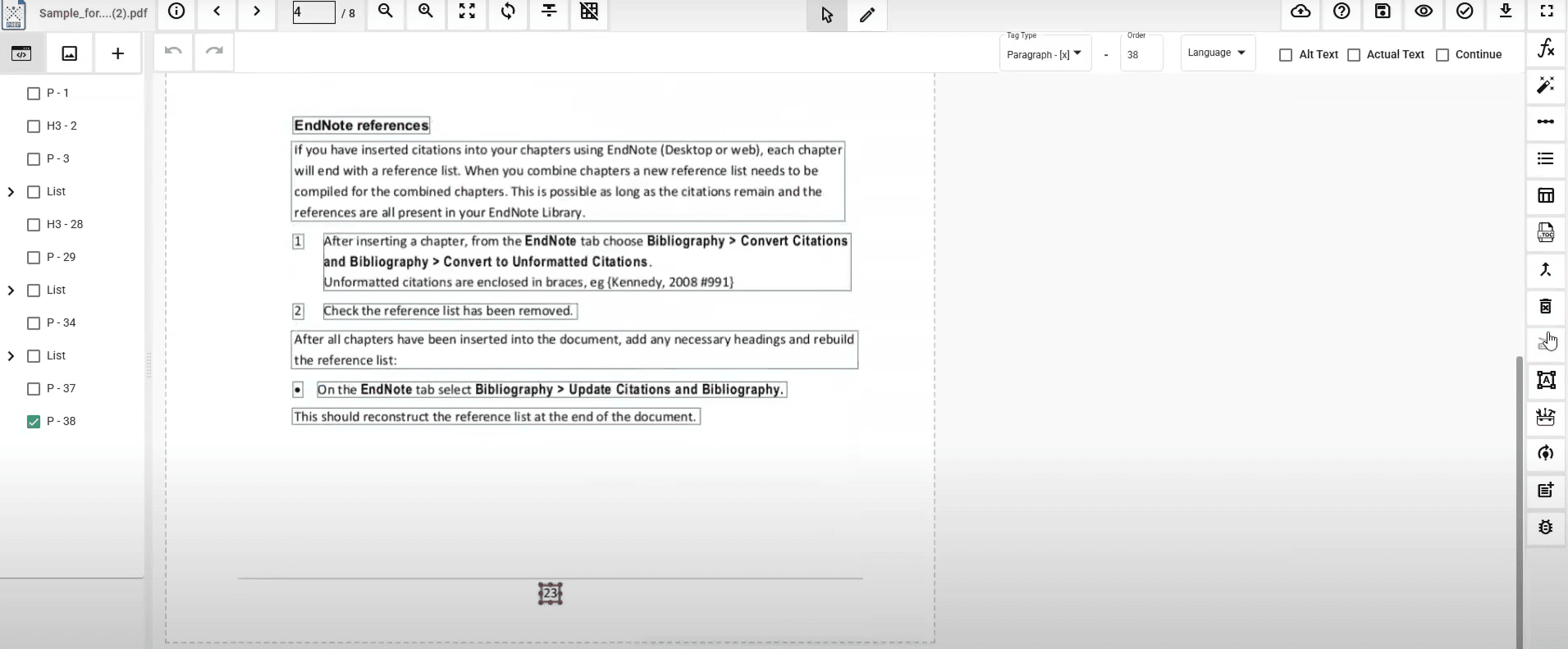
Accessibility considerations can include proper tagging, logical reading order, meaningful alternative text, accessible tables, and other applicable accessibility requirements.
How Can Organizations Create PDF/A Documents?
PDF/A documents can be created using PDF software, office applications, document conversion tools, and automated document-processing solutions. Existing PDFs can also be converted to PDF/A when appropriate.
However, converting a document to PDF/A does not automatically make it accessible. When accessibility is required, the resulting document should also be evaluated for structural and accessibility requirements, including tagging, reading order, alternative text, and other applicable PDF/UA or WCAG criteria.
