




What Developer Tutorials Tell Us About How PDFs Are Really Being Used
Case studyOctober 2, 2026
Case studyOctober 2, 2026

About Anne Lazarakis, Iron Software
The views expressed in this article are those of the author(s) and do not reflect the policies or positions of the PDF Association.
If you want to understand how PDFs are actually being used, developer tutorials are a good place to look.
Developers don’t usually start with “I need PDF technology.” They start with a job to do: generate an invoice from an ASP.NET Core Web API, create reports from application data, automate customer documents, extract information or build documents into an existing workflow.
For those of us working across sales, marketing and product, these tutorials are useful market intelligence. They show us where the developer journey starts. Customer conversations show us what happens next.
Developers are building applications, not PDFs
A recent tutorial from Microsoft MVP Mukesh Murugan is a good example. His guide to converting HTML to PDF in C# starts with a practical task: building a real invoice endpoint in an ASP.NET Core Web API.
What’s interesting to me isn’t simply the PDF generation. It’s everything that surrounds it.
The invoice is generated from application data. It needs to work across multiple pages. Currency needs to be formatted correctly. The PDF needs to be returned through an API. Then there are questions about rendering performance and what happens when that process moves into a production environment.
The PDF is one part of a much bigger application.
That’s much closer to how I see customers talking about PDF. The conversation may begin with generation, but it rarely stays there.
What C# PDF library tutorials tell us about demand
If developers are searching for C# PDF libraries to generate invoices through an ASP.NET Core API, the interesting signal isn’t simply that they want invoice generation.
Look at the surrounding requirements.
Developers want PDF functionality inside the technology stack they already use. They want to generate documents programmatically from existing data. They expect document generation to fit into APIs, cloud applications and automated processes.
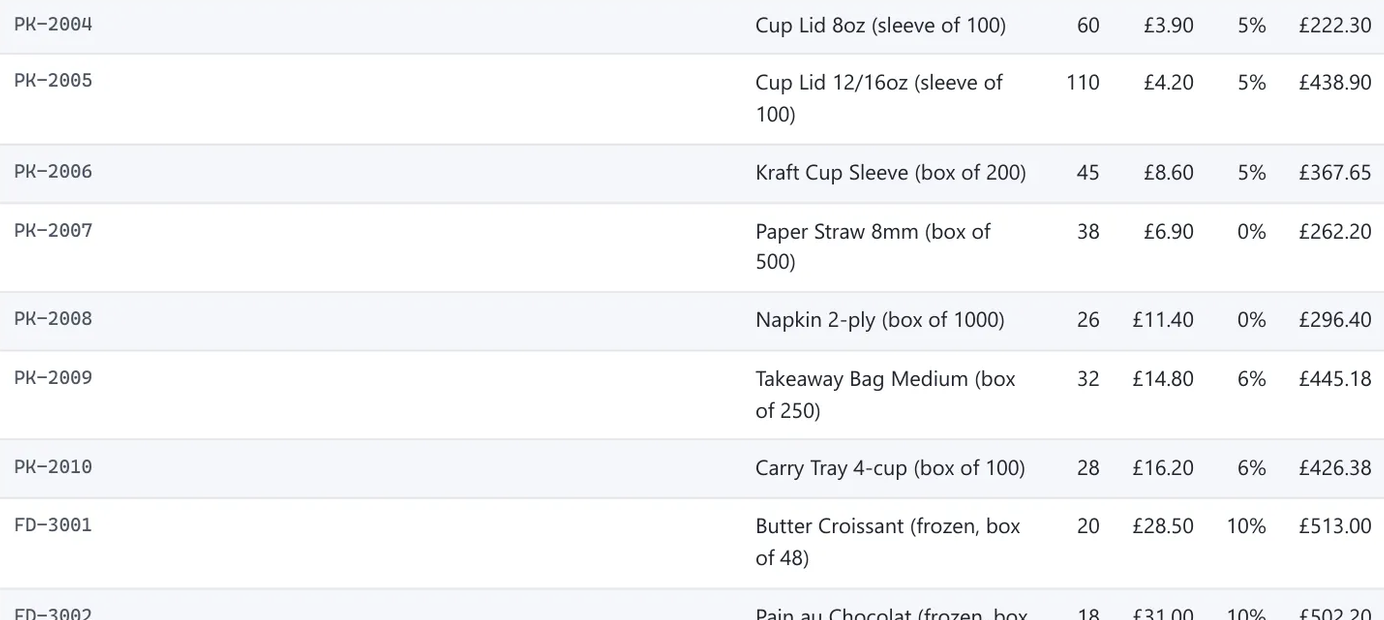
Even something as specific as pagination tells us something. A three-line sample invoice is easy. A real invoice with dozens of line items introduces page breaks, repeating headers and decisions about where content can safely split.
That’s useful information for anyone involved in building, positioning or supporting PDF technology because it gives us the context behind the feature request.
The first request is rarely the final requirement
This is something sales teams see constantly.
A requirement might begin with: “We need to generate invoices.”
Then you learn they need to generate thousands every month.
Then you discover those documents need to be retained for years.
Another team becomes involved and asks about accessibility. Procurement asks about compliance. The customer needs digital signatures. Another system needs to extract information from the finished documents.
Suddenly, a fairly simple PDF generation requirement has become a much broader document workflow.
This is where standards such as PDF/A and PDF/UA can enter conversations that originally had nothing to do with standards.
Production changes what “works” means
There's a big difference between successfully generating a PDF and successfully operating a PDF workflow.
Mukesh's tutorial demonstrates this nicely. Producing the file is the easy part. Moving the same process towards production introduces questions about rendering on the request thread, queuing work, concurrency and deployment environments.
For a developer testing a C# PDF library, success might initially mean producing an invoice that looks right.
For the organisation using it in production, success can mean something very different. The output needs to be consistent. It needs to work at scale. Documents may need to remain usable for years, meet accessibility requirements, pass validation or be reliably processed by other systems.
The technical requirement hasn't necessarily changed. We've simply uncovered more of it.
Tutorials are an overlooked source of product intelligence
I think this is where sales and marketing teams can contribute much more to technical product development.
Marketing sees what developers search for and which educational content gets attention. Sales hears what happens when those developers try to use the technology inside real organisations. Support sees where implementations become difficult. Engineering understands what's technically possible and where improvements are needed.
Viewed separately, each team gets one part of the story.
Put those signals together and you can start seeing patterns.
A tutorial about generating invoices isn't just a content topic. It can be evidence of a wider workflow: application data becoming documents, documents becoming business records, and those records eventually needing to satisfy requirements around accessibility, preservation, security or automated processing.
AI is changing the beginning of the workflow too
There's another interesting signal in modern developer tutorials: AI is increasingly appearing before the PDF has even been created.
In Mukesh's example, AI can help draft the HTML invoice template. But the tutorial also demonstrates why human and technical judgement still matter. A template that looks finished on screen can behave very differently when real data pushes it onto a second page.
I think this distinction is important.
AI can make it faster to get from an idea to a first version. It doesn't remove the need to understand the environment where the document will actually be used.
For PDF, that can mean understanding print behaviour, structure, accessibility, archival requirements and what happens when documents move between systems.
Customer conversations tell us where the tutorial leads
This is why I think commercial teams working with developer technology should remain close to technical education.
A developer tutorial shows the problem someone is trying to solve today. Sales and support conversations can reveal the problems they encounter six months later.
The progression might start with “How do I generate a PDF invoice?”
Then it becomes “How do we automate this?”
Then “How do we generate thousands reliably?”
Later, the questions might be about accessibility, long-term preservation, digital signatures, compliance or extracting information from those documents.
Those later questions are valuable feedback for the people building PDF technology. They can influence documentation, education, feature development and new products.
PDFs don't exist in isolation anymore
One of the clearest lessons I take from both developer content and customer conversations is that we need to stop looking at PDF requirements in isolation.
A document might begin as data in an application, become HTML, be rendered as a PDF, delivered through an API, stored as a business record and later processed by another system.
Each stage introduces different requirements.
The person building the first version may never see all of them.
That's why connecting what developers are searching for with what customers, support teams and engineers are experiencing is so valuable.
Start with what the developer is actually trying to do
Developer tutorials provide a useful snapshot of where PDF requirements begin.
A developer might start by searching for a way to generate an invoice from an ASP.NET Core API. Follow that same use case into production and the conversation can expand into scale, accessibility, preservation, security, automation and machine processing.
For those of us working between customers and technical teams, paying attention to that progression helps us ask better questions. It gives engineers better information about how features are being used. And it can help product teams identify when a seemingly simple developer requirement is pointing to something much bigger.
Sometimes, the best product insight doesn't start with a feature request. It starts with looking at what developers are trying to build.

Iron Software is a leading provider of developer tools for .NET, offering high-performance libraries that streamline document and data processing. Founded in 2015 and headquartered in Chicago, USA, Iron Software empowers developers to rapidly build complex applications with easy-to-integrate components for PDF generation, OCR, Excel, barcode, and printing workflows. Our…
Read more