





How Impressu builds practical automation with callas pdfToolbox

Case studySeptember 30, 2026
Case studySeptember 30, 2026

About callas software GmbH
The views expressed in this article are those of the author(s) and do not reflect the policies or positions of the PDF Association.
At Impressu, PDF automation often starts with a deceptively simple question: Why are we still doing this manually?
Sometimes the answer is a sophisticated web dashboard; at other times, it is a hot folder that solves one persistent production problem. Either way, the objective is the same: remove repetitive work, reduce opportunities for mistakes, and allow people to concentrate on tasks that genuinely require their expertise.
“I can’t sit there clicking the same buttons every day. I don’t care what it takes - I’m going to find a way not to have to do it,” says Dominic Cooper.
Today, callas pdfToolbox is one of the central technologies Dominic Cooper – Dom – uses to make that happen.
Print experience from the ground up
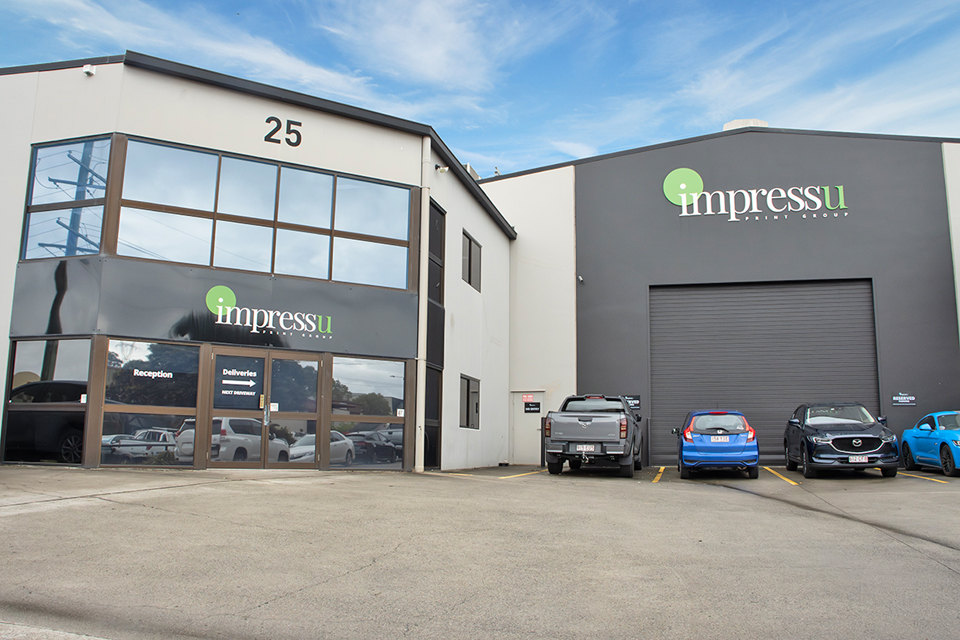
Impressu operates from Brisbane, Australia, producing sheetfed digital, offset and wide-format work under one roof, with binding and other finishing handled internally. The company produces everything from commercial print to signage and national campaign material. Since becoming part of IVE Group in November 2025, it has also begun exploring closer cooperation with the group’s larger production facilities in Sydney and Melbourne.
Dom’s current role is Business Systems & Process Development, a broad remit spanning operations, IT, systems development and process improvement. It gives him the freedom to look across the business, identify repetitive tasks, bottlenecks and opportunities for mistakes, and work out how existing software, automated workflows or new internal applications can improve them.
That role builds on a career spent close to production. Dom began his apprenticeship in a small print-on-demand shop and moved through graphic design and prepress into workflow development, automation and IT. Working in a small operation exposed him to almost every stage of production, from file preparation and digital printing to finishing and binding. He now combines that hands-on experience with the knowledge of colleagues who have spent decades in commercial print.
Being embedded inside Impressu is equally important. Rather than seeing one isolated workflow, Dom can understand what happens before and after it, how people actually use a solution and where it fits in the wider business. He can then observe the result, learn from it and continue improving it over time. Impressu has deliberately created room for that continuous-improvement work - a capability businesses of its size often bring in from outside.
“Knowing what a piece of software can do is useful, but knowing the process tells you what it should do,” says Dom.
Dom is not a software developer by background; he learned development because it gave him another way to solve production problems. The value, he says, lies at the intersection of understanding the software and understanding the process.
Discovering what pdfToolbox could really do
Dom first encountered pdfToolbox as part of an Enfocus Switch implementation around 2015. At the time, he thought of it mainly as a component that checked color spaces and trim size. His understanding changed as he explored more advanced automation and command-line processing. In recent years, he has also learned to build applications with the Django web framework, opening another level of integration.
“Once you know how to use pdfToolbox CLI, it’s just magic. I can run callas on the same server as my Django application, modify files and do everything I need right there,” says Dom.
pdfToolbox still works within established automated workflows at Impressu, while increasingly being integrated into custom dashboards, web interfaces, and CLI-driven processes. Rather than forcing Impressu into a single fixed way of working, it provides a PDF processing engine around which Dom can implement the company’s own business rules.
Giving sales teams better information
One of Impressu’s current workflows allows users to submit a PDF for automated inspection. pdfToolbox analyses the file and returns structured JSON data, which Dom uses to generate a custom HTML email for the relevant sales representative. It summarises colors, dimensions, page boxes, orientation, image resolution and other production information.
A simple green, orange or red status indicates whether the file appears ready for production, contains warnings or has serious problems. pdfToolbox performs the complex analysis, while the custom interface delivers the result in a form that makes sense to the person who needs to act on it.
Updating 1,500 clinical forms
A much larger challenge appeared when one of Impressu’s healthcare customers completed a major rebrand. Approximately 1,500 clinical forms contained an old logo. The forms themselves did not need to change, but the previous branding could no longer appear on anything sent to print.
Initially, each request was handled manually: an operator opened the PDF, removed the old logo, placed the new one, saved the file, and returned a proof. Each form took between five and ten minutes, and the process relied on every individual request being noticed and completed correctly. Eventually, one form containing the old logo reached production.
Because the logo appeared in a predictable position, Dom created a pdfToolbox profile that replaced it with the new version. Instead of updating forms only when they were required, Impressu processed the entire library.
“I made a hot folder, dropped about 1,500 files into it and let it churn through them. Within half an hour, every single one was done,” says Dom.
A task that would have required between 125 and 250 hours of manual production work was completed as one controlled batch process. It also removed the risk of another outdated form unexpectedly finding its way into production.
“There aren’t too many problems involving a PDF that I haven’t been able to solve with pdfToolbox,” Dom says. “Sometimes it’s the most random thing, but there’s always a way.”
Imposition built around the operator
Dom has also used pdfToolbox to develop a custom imposition system for Impressu’s wide-format department. The application creates grid-based layouts and adds a single continuous cutting contour for the company’s Zünd cutting equipment.
Operators use a web dashboard to submit a file and generate an imposition based on the known stock size. When they want to use an available offcut, they can enter its dimensions and have the system automatically calculate an appropriate layout.
More recently, Dom revisited the project using AI-assisted development and newer pdfToolbox imposition functionality. The revised system reduced processing times from approximately a minute to just a few seconds.
“The user inputs the file, hits a button, and it automatically calculates the imposition and the single cuts. Then they’re ready to go,” says Dom.
The result is not merely an automated imposition profile, but an operator-facing production tool built around Impressu’s own materials, equipment and working methods.
Automation as an ongoing process
Impressu’s relationship with Workflowz goes back many years. Dom first met Managing Director Alan Dixon while the company was investigating online document templating, and Alan has continued to provide advice and technology solutions around workflow and callas software. During a recent visit to Brisbane, he saw some of the systems Dom had developed and suggested that the story was worth sharing.
For Dom, automation is not a project that will eventually be finished. His position inside the business allows him to see how an improvement performs in practice, respond to the people using it and keep refining it. Some opportunities lead to substantial development projects; others require only a profile, a process plan and a hot folder.
As Impressu begins working more closely with other IVE Group production sites, Dom is eager to compare approaches, share what the Brisbane team has built and discover the next problems worth solving.
Automation is never an end in itself. Its purpose is to remove avoidable delays, make production more reliable and free skilled people from work that software can perform faster and more consistently.
And when the next unusual PDF problem appears, Dom’s response is unlikely to change: “There’s always a way,” says Dom.

callas software was founded in 1995 and has focused on making PDF files usable in production environments from the start. While PDF was designed as a flexible and open format, using it reliably in production – where standardization matters – often proves challenging. callas develops technology to identify PDF files…
Read more