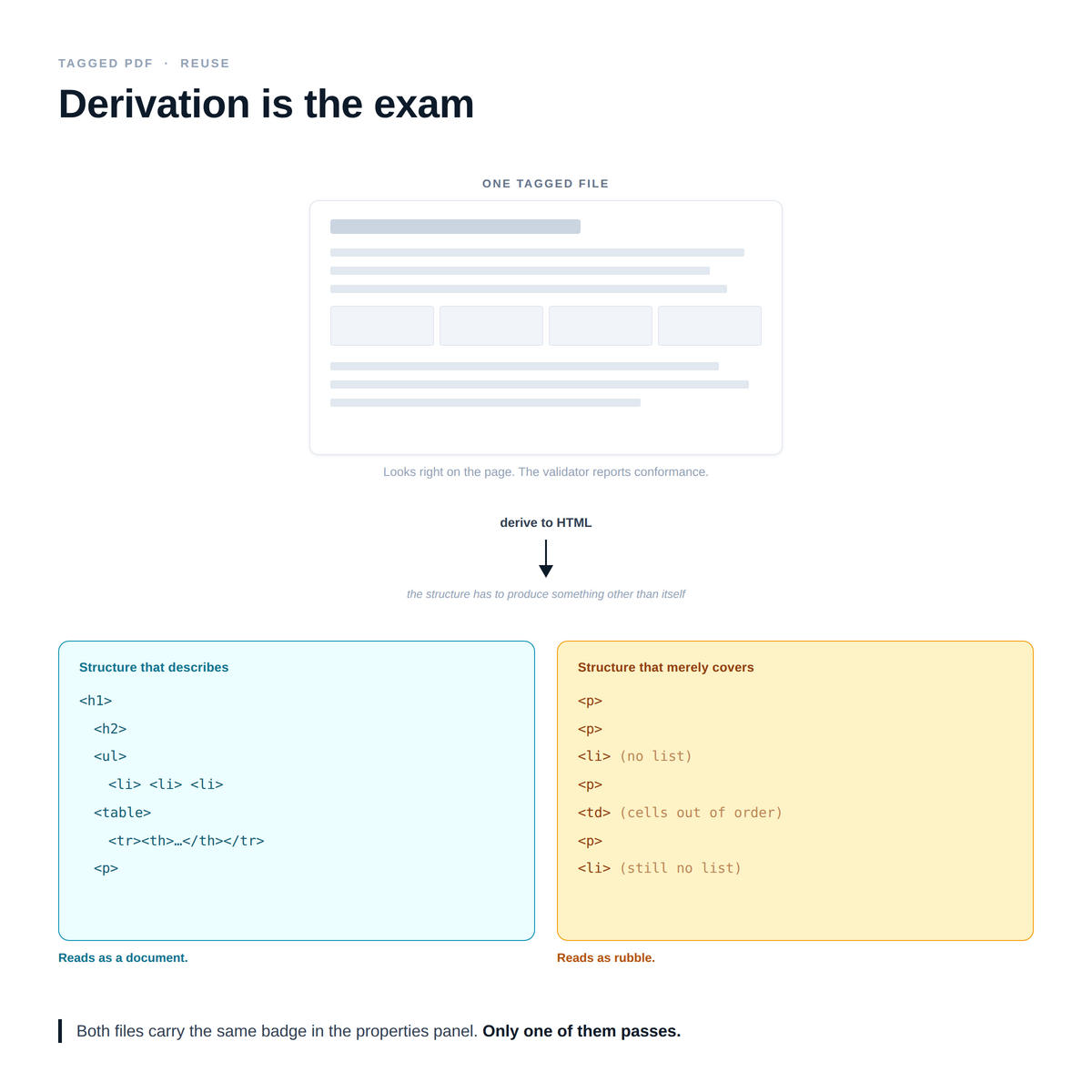



A document claiming conformance to PDF/A’s conformance level “b” can be visually perfect and machine-unreadable at the same time. This is not a bug — it is what the standard was designed to do. Understanding the difference between rendering a glyph and encoding a character is the first step to building archives that AI can actually use.
Most enterprise AI initiatives are failing not because of the model — but because of the document. This whitepaper examines why flat, image-based PDFs render corporate archives invisible to RAG pipelines and LLMs, and makes the operational case for cloud-native OCR, PDF/A-2u standardisation, and zero-trust document architecture as the three non-negotiable preconditions for an AI-ready data lake.
The State Office for Health and Social Affairs Berlin uses axesWord to create accessible documents directly in Microsoft Word and efficiently meet legal accessibility requirements. Broad adoption across departments reduces errors, speeds up document processes, and integrates accessibility into everyday workflows.
Math in PDF files is finally fully accessible, and can be navigated and read by capable assistive technology. This development, aligning creation software, modern PDF standards, compatible viewers and assistive technology, finally closes the accessibility gap between the web and downloadable STEM documents.