




The (Printable) Page Still Matters
ArticleMay 29, 2026
ArticleMay 29, 2026

About Duff Johnson, PDF Association
Digital transformation has changed how organizations create, distribute, and manage information, but it has not eliminated the need for paper, the “OG hard copy” document.
In many settings, paper remains essential because it provides a tangible, immediately usable form of information that does not depend on a device, software, network access, battery power, or user account.
Even in highly digitized environments, organizations still sometimes need documents that can be reviewed offline, without a computer or device. These workflows can include signing, filing, displaying, security, archiving… or culturally significant acts, such as presenting a document to someone with no technical intermediary.
Accordingly, paper (actually, print in general) continues to matter for many practical reasons. A printed document can be read from anywhere in a warehouse, courtroom, field office, hospital room, factory floor, construction site, classroom, or emergency-response environment where screens may be inconvenient, unavailable, distracting, or unsuitable. Paper is also useful when multiple people must review the same content physically, need the option to mark it up, compare pages side by side, or retain a copy as evidence of what was communicated at a given point in time. In legal, regulatory, healthcare, financial, engineering, and government contexts, hard copy may remain part of formal procedures, recordkeeping, audit, or public access.
Traditional hard-copy documents support human factors that purely digital workflows may not always satisfy. Many people still prefer paper for careful reading, annotation, and proofreading of complex material. Other people may require paper due to limited access to technology, low digital literacy, inaccessible systems, or other practical or institutional constraints. Presuming universal digital access tends to exclude users and use cases and reduce resilience. Although it’s easy for digital natives to imagine otherwise, paper is not an outdated medium; even if it’s no longer dominant, print is simply a reality of the global information ecosystem.
When considering the purpose of digital transformation, the question should not be whether paper or digital documents will prevail. The issues revolve around how organizations can maintain reliable continuity and provenance between digital source files and printed output. This is an area in which PDF plays a central role.
PDF was designed to preserve the appearance, structure, and intended presentation of a document across computer systems. Besides text, fonts, images, graphics, color information, and forms, PDFs contain metadata, annotations and (when properly authored) structural information that makes navigation and reading of PDFs possible for users with disabilities.
Most of the time, actually printing a PDF is unnecessary. Simply possessing (and viewing as needed) the PDF is enough.
PDF meets the continuing need for hard copy in most cases because it functions as a dependable bridge between electronic and physical documents. A well-made PDF can represent a fully-accessible document of record while also supporting high-quality print production. It allows organizations to distribute a single authoritative file that supports both digital and paper workflows, reducing the risk of printed copies diverging from electronic versions. For regulated or long-lived information, ISO standards for PDF such as PDF/X, PDF/A and PDF/UA are aligned to support preservation and accessibility objectives, helping organizations manage documents consistently over time in both digital and hard copy.
The persistence of hard copy should not be understood as a failure of digital transformation. The ongoing popularity of PDF reflects the enduring need for information to be durable, portable, verifiable, and usable in diverse circumstances. PDF is uniquely suited to this hybrid reality. It enables the efficiencies that are the first purpose of digital transformation while respecting the practical, legal, and human reasons that paper remains necessary. In that sense, PDF is not merely a format for printing; it is an infrastructure for trustworthy documents across every screen and page and through time.
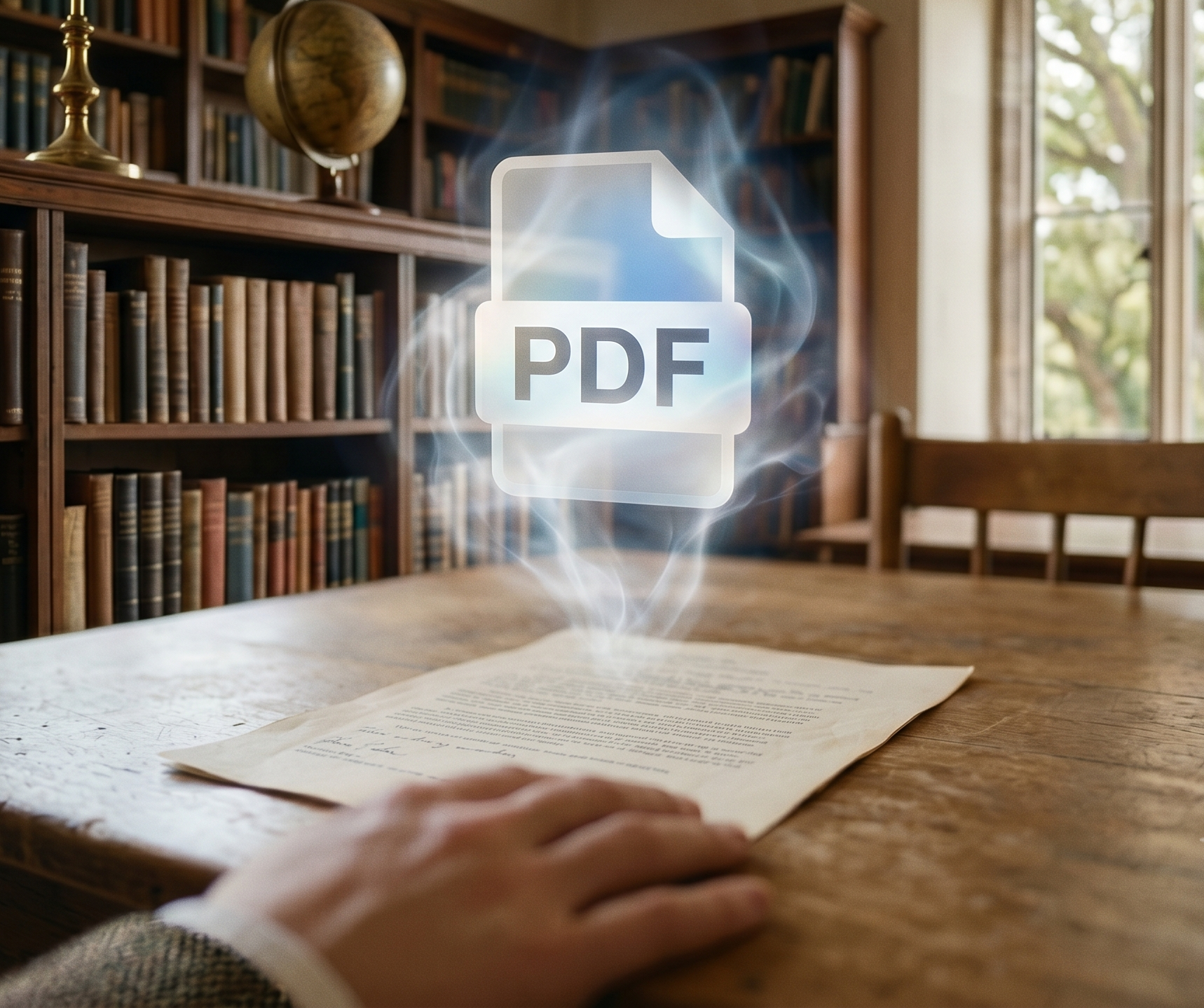
Image credit: Google Gemini
