




Cheers from London!
PDF Association newsMay 12, 2026
PDF Association newsMay 12, 2026
About PDF Association staff
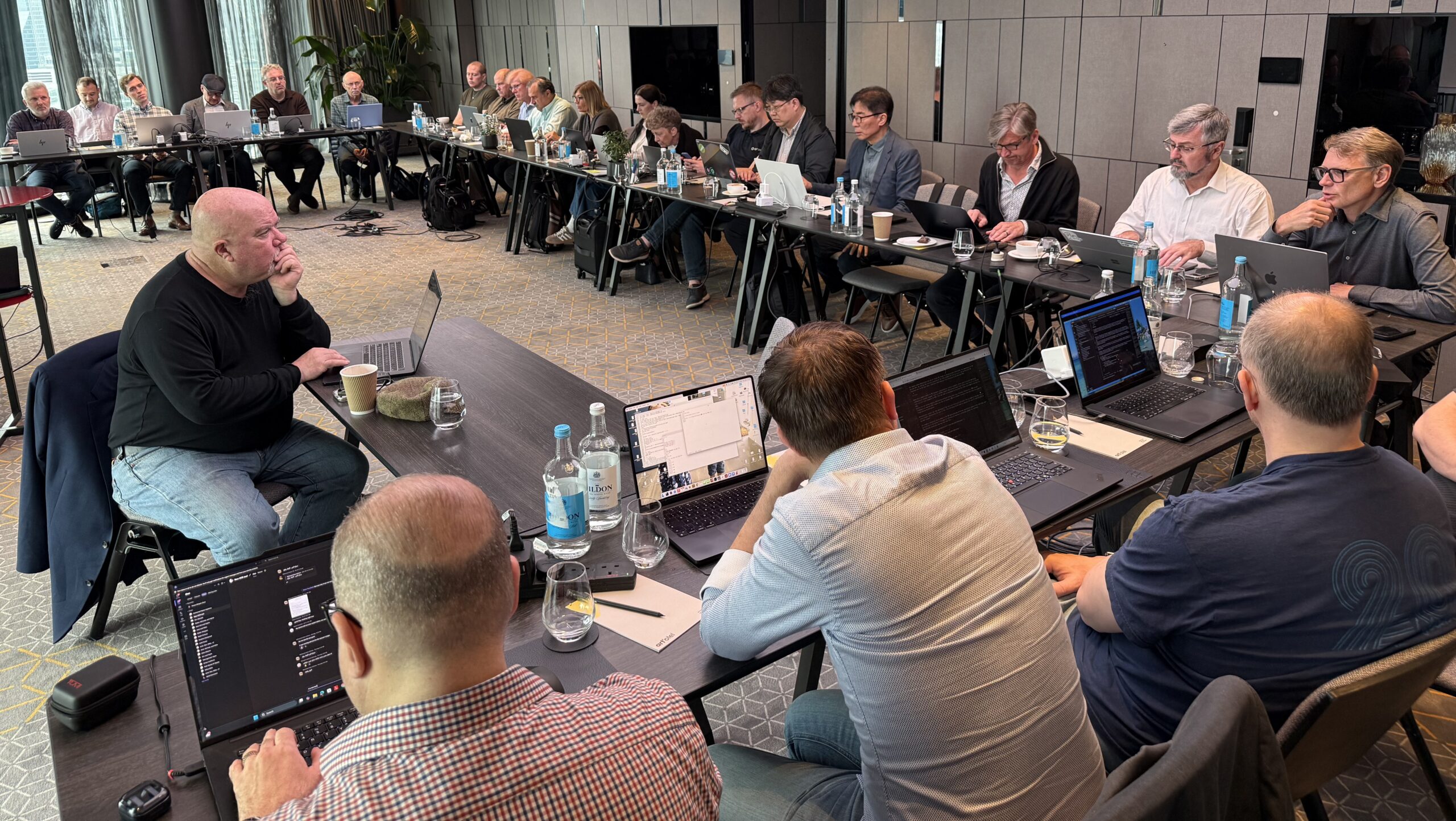
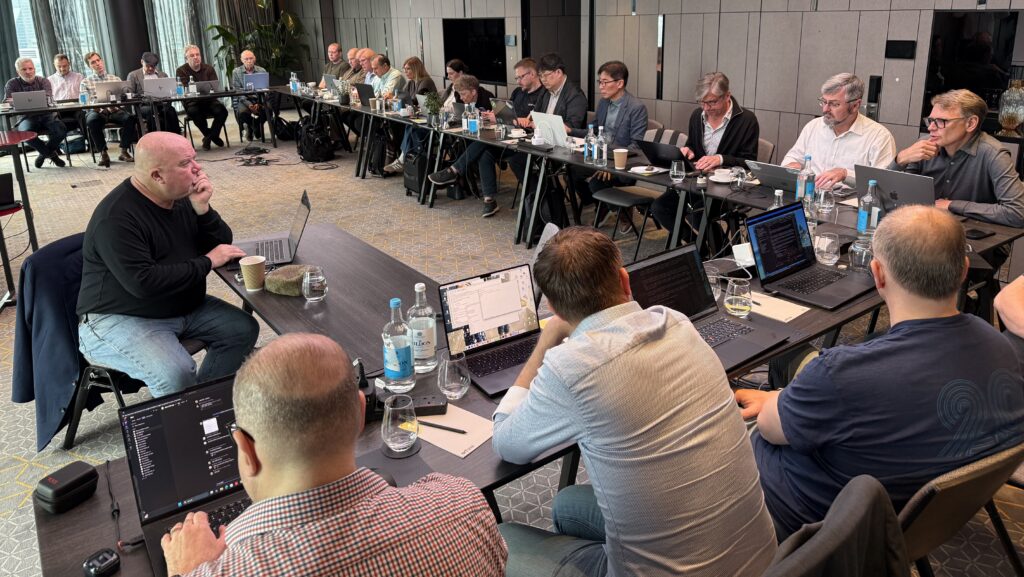
Last week PDF Association members gathered in London for PDF Week London 2026.
PDF Week comes three times each year; twice for "in-person" events and once online, in a series of meetings that (actually) takes about two weeks.
The in-person PDF Weeks offer attendees a variety of opportunities, including:
- Engaging directly with industry peers, international representatives and institutional end-users
- In-person participation in the industry's Technical and Liaison Working Group meetings
- The opportunity to observe and contribute to ISO standardization processes
- ...and of course, lots of time at coffee-breaks and meals for networking!
The event is designed to foster connections between ongoing technical activities within the PDF Association and broader ISO standardization efforts. It's also a chance to develop personal connections.
Joined by delegates to TC 171 SC 1 and SC 2, the London meetings, which ran from May 4-8, advanced PDF industry priorities and ISO standardization efforts in document technology. Here's a short summary of the week.
PDF Association working groups
- The PDF TWG reviewed the status of the upcoming Brotli extension and agreed to add mechanisms for custom Brotli dictionaries to the existing specification. Christian Nyffenegger presented on his Semantic Data Layer proposal aimed at enhancing machine-readability of PDF content like tables and URLs to combat "link rot." Leonard Rosenthol reintroduced "PDF Path," a standardized pathing system for referencing objects and structure elements within a PDF, similar to XPath.
- The PDF Imaging Model TWG discussed a proposal from FOGRA's Andy Kraushaar regarding an algorithm to unambiguously render spot color tint values in PDF/X files. Max Derhak provided an update on ICC Max which provides extended functionality without breaking legacy workflows.
- The PDF Reuse TWG focused primarily on challenges reported with right-to-left (RTL) text extraction. It decided to retain the mandatory nature of Note IDs in PDF/UA-1. It launched a new discussion on inconsistent whitespace tagging across vendor products, seeking guidance for a PDF/UA-1 technical note.
- The Deriving HTML from PDF TWG meeting reviewed the forthcoming publication of version 1.2 of the WG's derivation algorithm in the context of the planned transition to Metanorma/ASCIIDoc for future document maintenance. Discussions also covered new guidance for best practices in PDF authoring for HTML derivation, the notion of a "reflow" standard for tagged PDFs, and revisiting annotation derivation and RTL language support.
- The PDF/UA TWG meeting focused on finalizing its upcoming technical notes, debating complex table tagging, and accelerating work on the Matterhorn Protocol and other ISO projects. It also agreed to update language referencing "Human" vs. "Machine" checks to reflect marketplace changes.
- The PDF/A TWG addressed two main topics; analyzing the differences between the PDF/A-4 2020 and 2026 revisions, and a new work item to expand the scope of PDF/A validation to include reliable rendering of objects.
- The Rich Media TWG agreed that the JSON formula aspect of its proposal should be broken out into a separate, generic specification, developed by the PDF TWG, to be applied natively to PDF data structures. The WG agreed that XMP should be re-serialized according to ISO 16683-3 (JSON-L deserialization of XMP), which can then be processed by the JSON formula.
- The Cryptography & Provenance TWG discussed current documentation projects, validation policy, PQC signing algorithms in PDF signatures, hybrid algorithm use. The C2PA chair provided an update discussing new features in C2PA 2.4.
- The 3D PDF TWG's Phil Spreier introduced a draft Technical Note on adding 3D validation properties to PDF, following the model of STEP AP242 (ISO 10303-242). The WG also reviewed various errata against PRC.
- The PDF Accessibility LWG advanced test procedures and examples for links and forms use cases.
- The PDF Forensics LWG focused on reviewing and developing sections of its best practices document, including a primer on interactive forms and examining content for modification.
- The LaTeX Project LWG's meeting reviewed its new publication, Best Practice Guide: Math in PDF, and reviewed a demonstration showing that LaTeX can now generate highly accessible PDFs with embedded MathML and associated files, enabling screen readers such as NVDA to accurately read and navigate mathematical expressions. The group also discussed validation workflows, and the development of a new document mapping LaTeX semantics to PDF structures as well as a new namespace for LaTeX definitions.
- The PDF/UA Processor LWG's meeting focused on transitioning its work from spreadsheets to GitHub. Those attending also reviewed initial guidance on two challenging areas for API mappings: artifacts and forms.
ISO working groups
- TC 171 SC 2 WG 7 agreed to accept various technical errata and editorial comments into the PRC document and prepare it for a Draft International Standard (DIS) ballot. An ad hoc editing committee will conduct a technical review before the revised document is submitted to ISO.
- TC 171 SC 2 WG 8 (PDF) focussed on updates to several ISO standards, disposition of comments, and next steps for publication for ISO 32000-2 Amendment 1, ISO TS 32004, ISO TS 32009 and addressed some outstanding errata.
- TC 171 SC 2 WG 9 (Accessibility) reviewed the status of ISO TS 32005, which has now had its deadline extended. The WG also heard an update on progress with the PDF-AAM collaboration with W3C.
- TC 171 SC 2 WG 10 (File Formats) covered the disposition of comments for the DIS of ISO 20271-1 and the working draft of part 3. The group set deadlines for the next stages of work
- TC 171 SC 2 WG 13 (Content Provenance) reviewed the status of ISO/DIS 22144, Authenticity of information - Content Credentials and reviewed the latest draft of ISO/CD 32008, Authenticity of information - Extensions to Content Credentials for ISO 32000-2 (PDF 2.0).
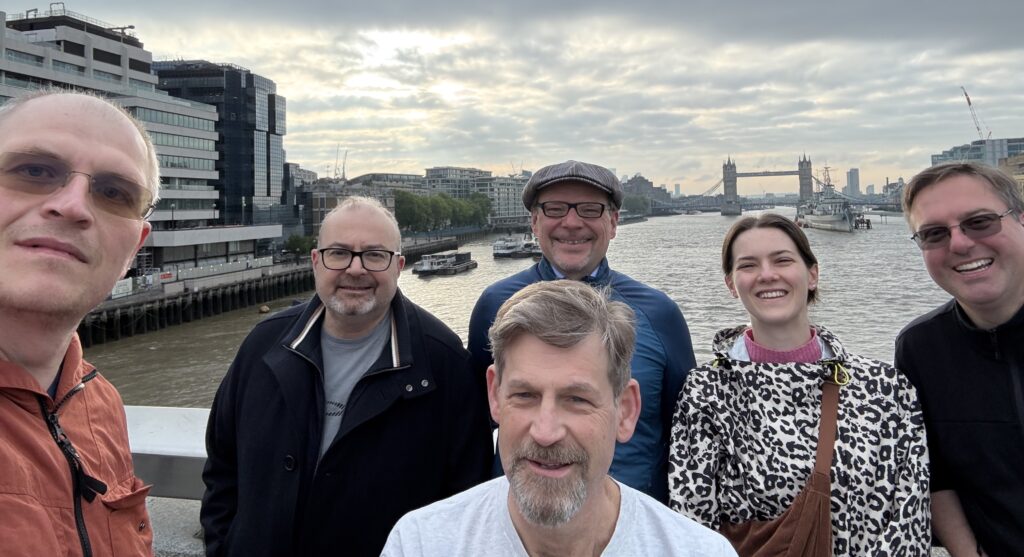
The bravest, most intrepid and sleep-deprived of the group started the day on Tuesday with a 0630 walk from Adobe's offices to London Bridge to get a good view of the famous Tower Bridge in early morning light.
While PDF Week is primarily an in-person event, provisions are made for remote participation. PDF Association members and ISO delegates unable to attend in person may join the meetings virtually through audio and screen-sharing options. This hybrid approach ensures broader accessibility and inclusivity for participants worldwide.
We even have some fun...
We also want to note our thanks to Adobe, which provided our meeting space for Tuesday - Friday.
Upcoming PDF Week Incheon 2026
The next PDF Week will be held in Incheon from October 12-16, 2026!
For more information please visit the PDF Week Inchecon 2026 event page.
